 EN
EN



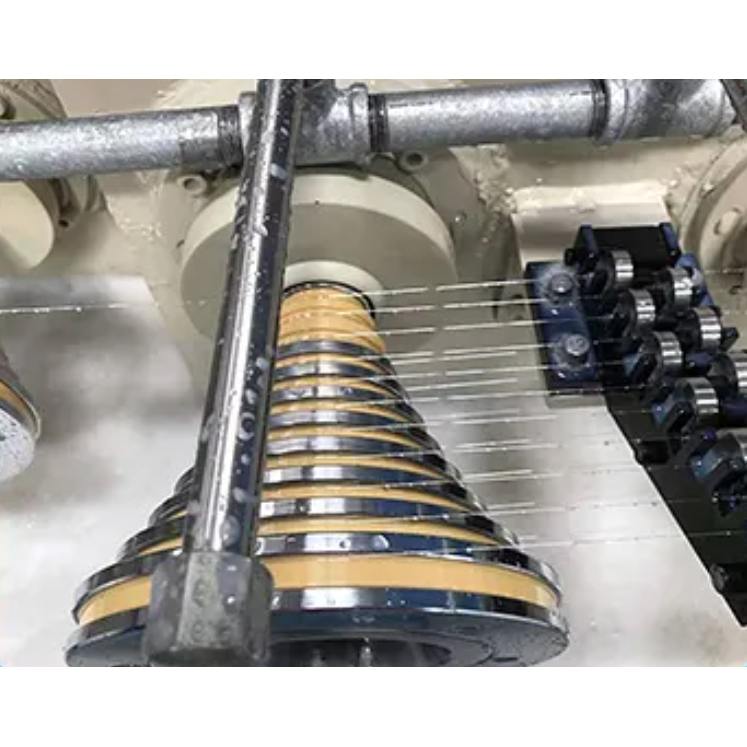
Wire production demands exceptional precision and uniformity across every spool and batch. Modern manufacturers face mounting pressure to deliver consistent product quality while maintaining cost efficiency and meeting strict industry standards. A continuous annealing machine directly addresses this challenge by integrating controlled heat treatment into the production line, fundamentally transforming how wire achieves dimensional accuracy, mechanical properties, and surface integrity.
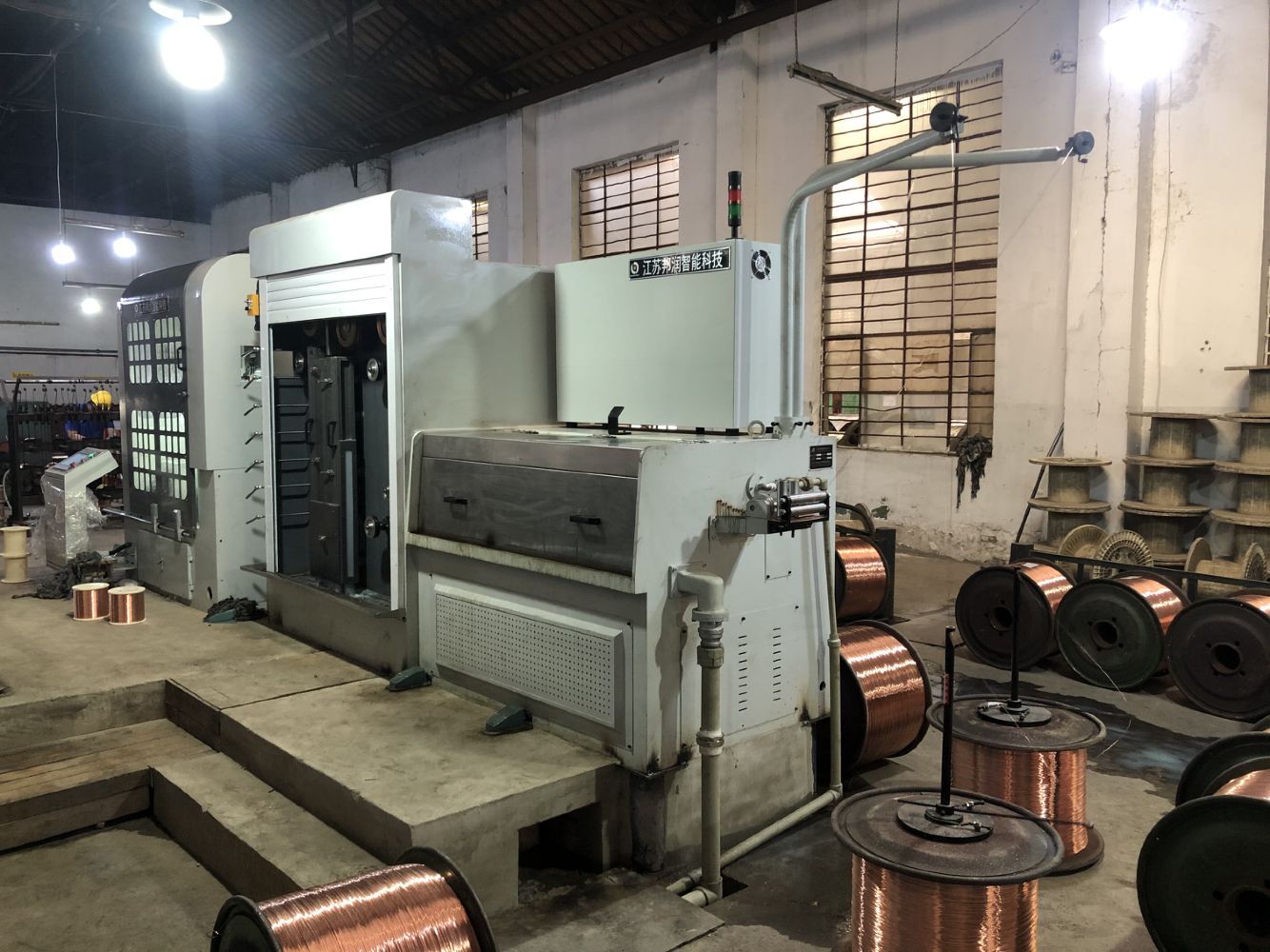
The integration of heat treatment into wire production workflow represents a critical operational shift. By applying controlled thermal cycles during drawing operations, manufacturers eliminate internal stress, refine crystal structure, and establish uniform mechanical properties throughout the entire wire cross-section. This real-time approach to heat treatment ensures that wire exiting the production line meets specifications reliably, reducing defect rates and downstream processing waste while improving overall wire production efficiency.
Understanding Heat Treatment in Wire Production
The Role of Thermal Processing
Heat treatment fundamentally alters the microstructure of metal wire by breaking down work hardening that accumulates during drawing. As wire passes through progressively smaller dies, atoms become compressed and displaced, creating internal strain and brittleness. Controlled annealing cycles reverse this condition by allowing atoms to reorganize into lower-energy configurations. The result is wire with improved ductility, reduced residual stress, and enhanced mechanical properties that directly influence performance in end-use applications.
Consistency Benefits Across Production Runs
Traditional batch annealing separates heating from drawing, introducing variables in cooling rates, temperature uniformity, and processing timing. A continuous annealing machine eliminates these variables by integrating thermal cycles into the drawing process itself. Every meter of wire receives identical thermal treatment under precisely controlled conditions, guaranteeing batch-to-batch consistency that batch processing cannot match. This consistency reduces quality variance, minimizes rework, and builds customer confidence in product reliability.
Wire Production Process Enhancement Through Continuous Annealing
Integrated Workflow Advantages
Wire production with continuous annealing machines operates as a unified thermal-mechanical system where drawing force, die geometry, and annealing temperature work together optimally. The continuous design eliminates the need for separate furnaces, cooling chambers, and handling steps that traditional batch wire production requires. This integrated approach accelerates throughput, reduces floor space requirements, and lowers energy consumption per unit of wire produced. Manufacturers gain the ability to produce wire that maintains consistent tensile strength, hardness, and elongation properties across entire production runs.
Real-Time Control and Process Optimization
Modern continuous annealing systems incorporate advanced sensors and automated controls that monitor temperature, wire speed, and mechanical parameters throughout production. This real-time feedback enables operators to adjust thermal cycles instantly if variations occur, preventing defects before they propagate through the entire spool. The ability to fine-tune heat treatment conditions on demand means wire producers can serve multiple customer specifications from a single machine without lengthy changeover procedures. This flexibility directly translates to reduced lead times and improved responsiveness to market demands.
Quality and Performance Outcomes
Mechanical Property Uniformity
Wire produced through continuous annealing achieves superior mechanical property distribution because heat treatment occurs during, not after, the drawing process. Internal stresses that normally accumulate from drawing are relieved immediately, preventing the formation of stress concentrations that lead to premature failure. The resulting wire exhibits consistent hardness values across its diameter and length, predictable tensile strength, and improved resistance to fatigue in dynamic applications. Industries relying on wire for springs, electrical conductors, and structural reinforcement benefit immediately from this enhanced uniformity.
Surface Quality and Processing Capability
Continuous heat treatment during wire production also improves surface characteristics by promoting recrystallization and reducing oxide formation. Wire emerges from the production line with cleaner surfaces and improved drawing performance for subsequent processing steps. Secondary operations like coating, plating, or further drawing experience fewer defects and require less preparatory cleaning. This cascade of improvements throughout the value chain significantly reduces overall manufacturing cost while elevating final product quality that end customers can depend on.
FAQ
How does continuous annealing differ from batch annealing in wire production?
Batch annealing heats wire after drawing in separate furnaces, introducing cooling rate variations and handling delays that create inconsistency. Continuous annealing integrates heat treatment into the drawing line itself, applying identical thermal cycles to every meter of wire, ensuring uniform mechanical properties and eliminating the quality variance inherent in batch processing.
What types of wire benefit most from continuous annealing machines?
Copper wire, stainless steel wire, and specialty alloy wires used in electrical, automotive, and spring applications benefit significantly from continuous annealing treatment. Any wire production requiring consistent tensile strength, ductility, and predictable mechanical properties gains substantial advantage from integrated heat treatment during the drawing process.
Can continuous annealing reduce wire production costs?
Yes, continuous annealing reduces costs by eliminating separate annealing equipment, cutting energy consumption, minimizing rework due to defects, and reducing floor space requirements. Faster throughput, improved first-pass quality, and reduced labor requirements for handling between drawing and heating steps all contribute to lower per-unit production cost.

